muscle pain, dyspepsia and constipation, flatulence, carminative, stomachic, irregular flow, cramps, PMS, menopause, frigidity, athlete's foot, leukorrhea, dandruff, oily hair, wrinkles, acne, fragile and thin skin, hair growth, skin redness, open pores, insomnia, nervous tension, anxiety, depression, paranoia, headache, migraines.
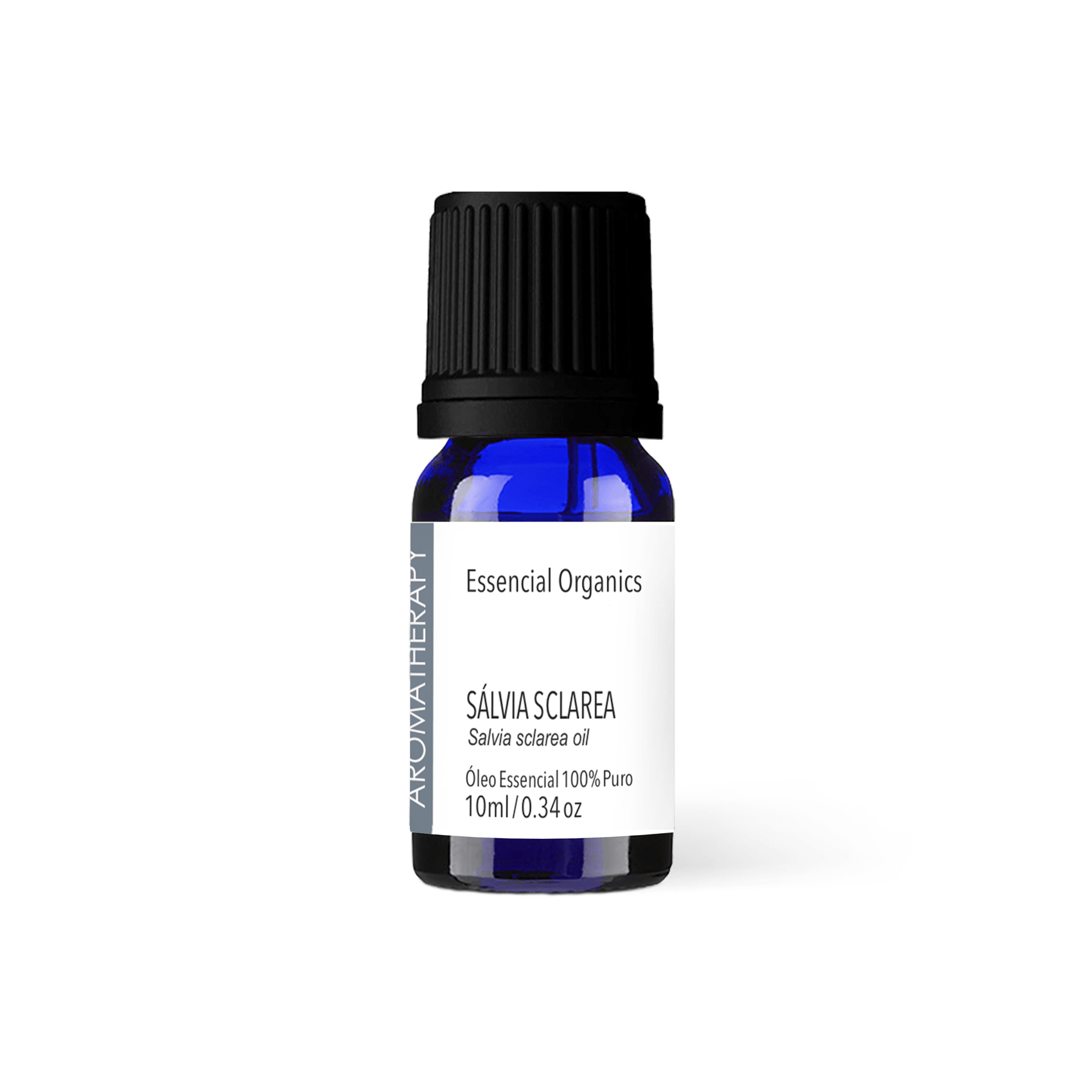
The genus Salvia has approximately 1,800 species. Native to the northern Mediterranean, clary sage is an herbaceous plant that reaches approximately 1 meter in height, with hairy leaves and stemmed flowers, resembling lavender. Clary sage oil contains approximately 65% linalyl acetate, the same main component as lavender oil, and its main properties are: Antidepressant, antiseptic, antispasmodic, astringent, carminative, deodorant, emmenagogue, digestive, hypotensive, sedative, and uterine.
- Regulates the nervous system;
- Physical and mental relaxant;
- Lowers blood pressure;
- Astringent.
Clary Sage Essential Oil is indicated for the treatment of oily and acne-prone skin. It can also be used for sore throats, as a gargle. In addition, it relieves stress and can be used by individuals with high blood pressure. Usage recommendations: Use in inhalations, room diffusers, aromatherapy necklace, massages (diluted in vegetable oils or body lotion), compresses, gargling, foot baths, bathtub baths, showers, saunas, and in cleaning water for the environment.
Clary sage is preferably used in aromatherapy instead of salvia officinalis, because while clary sage shares many properties with officinalis, clary sage contains a very low thujone content, posing no risk of toxicity. The essential oil is distilled from the herb and contains borneol, salviol, cineol, sclareol, salvene, and salvone. It has a pleasant, sweet, yet slightly musky aroma. Clary sage is very useful in cases of stress and tension. It is also useful for aiding in cases of asthma, as it is a good antispasmodic, helping with the anxiety and tension commonly found in people with asthma. It is also powerful for relaxing muscles, especially when derived from mental stress. It is also indicated for digestive problems, especially in cases of stomach pain. An abdominal massage or a warm compress will provide great relief. The same method can be used for menstrual cramps, as the antispasmodic action of clary sage will cease the uterine contractions that cause the pain. It also helps regulate menstrual flow. One of the common actions of clary sage is to prevent excessive sweating. It also helps reduce sebum production, especially on the scalp, and can be added to the last rinse water for people with dandruff and very oily hair. Clary sage also has a reputation for being an aphrodisiac; the effect is undoubtedly due to the relaxing and at the same time euphoric action of the oil, and proves to be of great value to couples who are going through difficult times in their relationship due to external factors, such as financial problems and other worries, which create tension that affects the couple. It is considered one of the most powerful relaxants known in aromatherapy, and can be very well used by people suffering from anxiety and mental fatigue. For women, it will be very useful for hormonal changes, aiding in menopause, PMS, menstrual cramps, and frigidity.